A good plan isn't enough: why Marine ERP projects still struggle
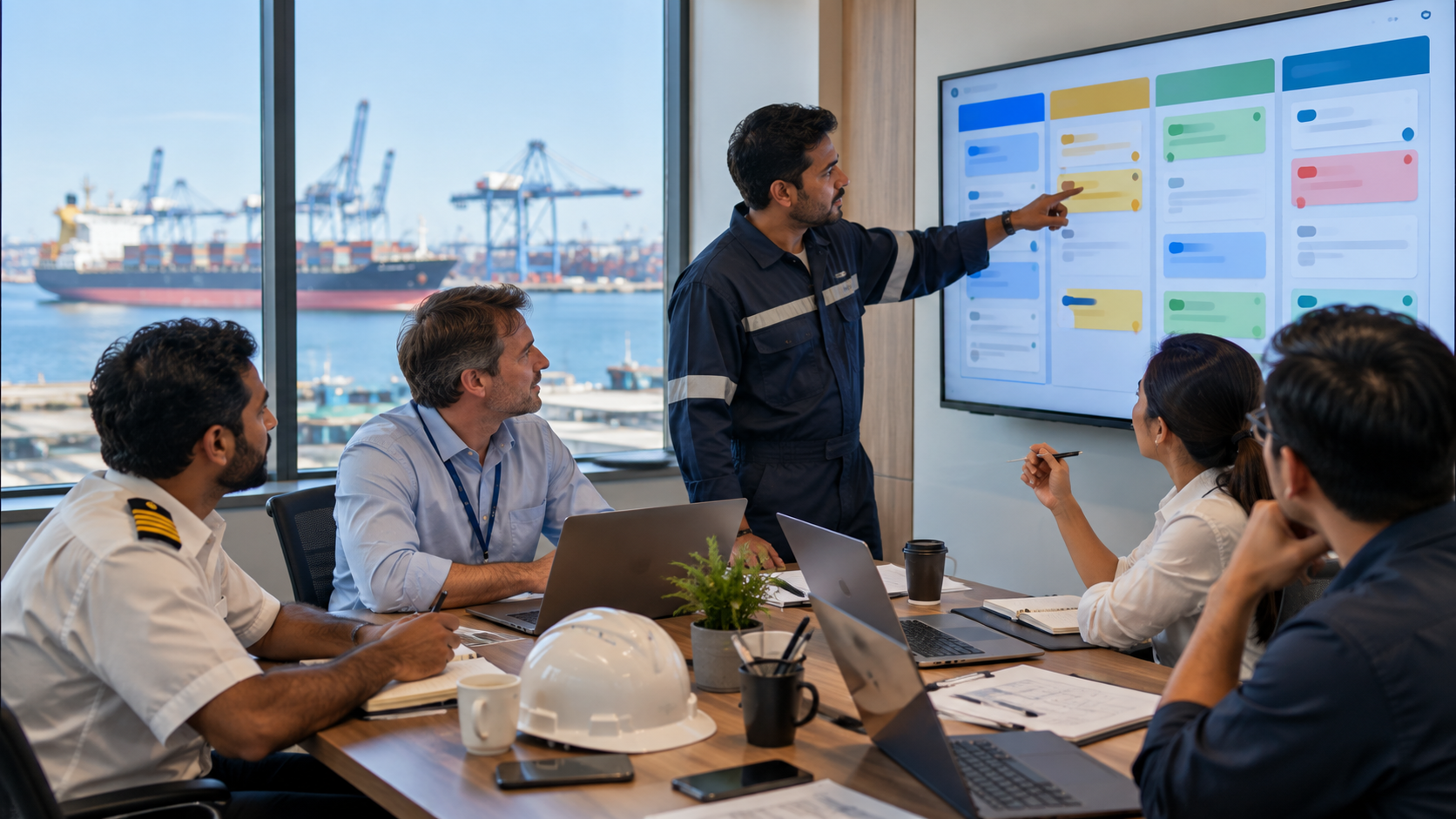
Project management is not just about tracking tasks, timelines and deadlines. It is about people, decisions and communication, and in a Marine ERP project, all three are spread across ships and shore.
S. KumaramahalingamOctober 20265 min read
Because projects rarely fail simply because a task was missed.
A plan can be thorough and a team can be skilled, yet the project still slows down, drifts or disappoints. The causes are usually found in how people work together around the plan.
Five reasonsWhere projects really struggle
Select a reason to see what it looks like in a Marine ERP project and what helps.
Decisions are delayed
Small unresolved decisions can become major project blockers. A question left open for a week quietly holds up the work that depends on it.
In a Marine ERP projectAn item-code naming rule or approval flow stays undecided while configuration waits.
What helpsKeep a visible decision log with an owner and a due date for every open question.
Stakeholders are not aligned
Different teams may have different expectations of what "success" means. Everyone works hard, but towards slightly different finish lines.
In a Marine ERP projectShore management wants reporting, vessels want less paperwork, vendors want a milestone signed off.
What helpsAgree a shared, written definition of success early and revisit it at every phase.
Risks are identified too late
A good project manager doesn't wait for a risk to become an issue. Early, uncomfortable conversations cost far less than late surprises.
In a Marine ERP projectPoor vessel data or low crew availability is noticed only when testing starts.
What helpsReview risks at every status meeting and assign each one an owner and a response.
Communication becomes a reporting exercise
Sharing status is not the same as creating alignment. A report can be sent to everyone and still be understood by no one.
In a Marine ERP projectLong weekly status emails go out while vessel users remain unsure what changes for them.
What helpsUse short, two-way conversations for the people affected, not just broadcast updates.
People are overlooked
A project ultimately succeeds through the people who use, support and operate the solution. Plans, tools and dashboards come second.
In a Marine ERP projectCrew and shore staff meet the new system for the first time close to Go-Live.
What helpsInvolve users early, listen to their concerns and make support easy to reach.
The simple principle
Make the right people aware, make the right decisions at the right time, and keep everyone moving towards the same outcome.
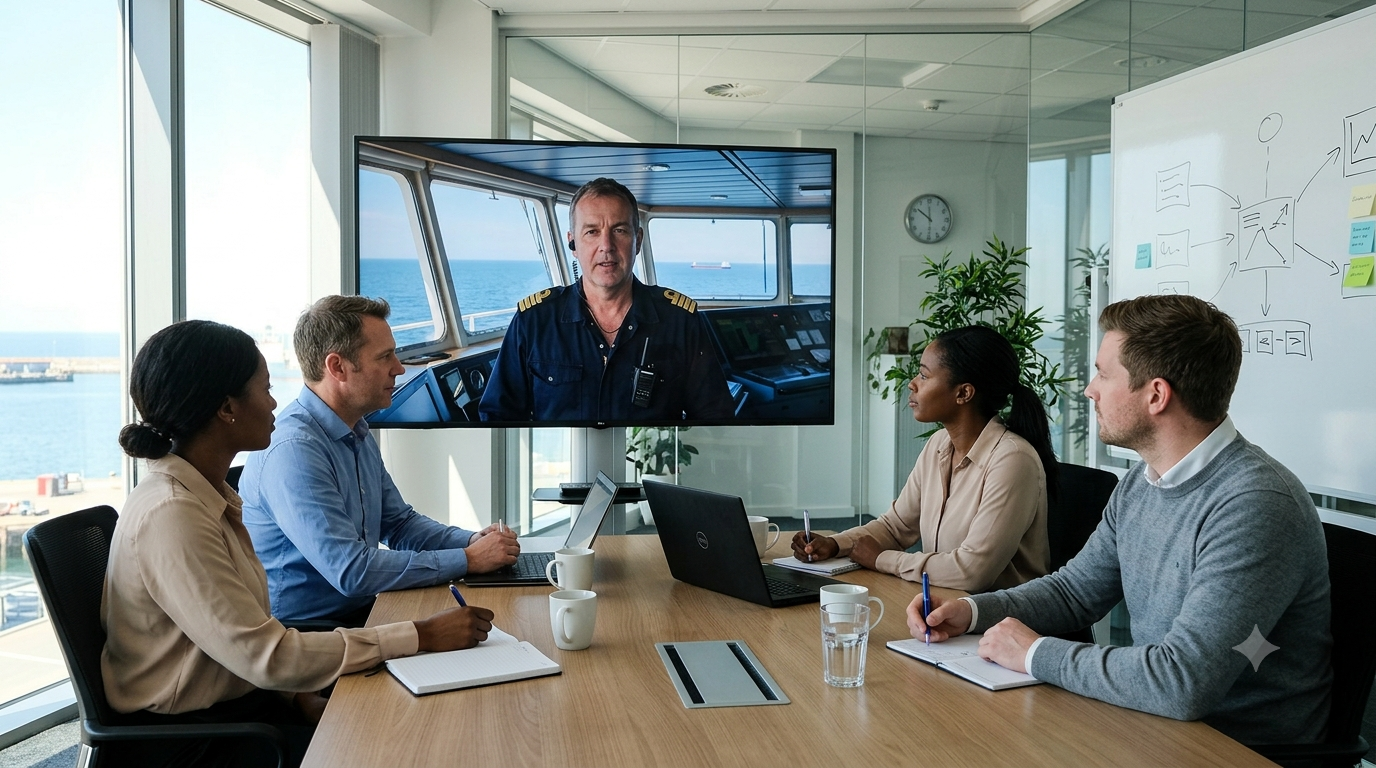
Alignment happens in conversations, not in status reports: ships, shore and technical teams reviewing decisions together.
Why it matters more hereMarine ERP involves many stakeholders
In Marine ERP projects this principle becomes even more important, because the project involves multiple stakeholders who rarely sit in the same room:
Vessels
Shore teams
Technical teams
Management
Vendors & implementation partners
One shared outcome
The project manager's jobMore than keeping to schedule
The project manager's job is not just to keep the project on schedule. It is to keep these four things moving together:
PeopleUsers, support teams and leadership
ProcessHow the work actually flows
TechnologyThe ERP and the systems around it
Business objectivesThe reason the project exists
Use this in your next reviewFive questions for your project meeting
Which decisions are still open, who owns them and when are they due?
If we asked each stakeholder what "success" means, would the answers match?
What is the biggest risk we have not talked about yet?
Did our last update create alignment, or did it only share status?
Which users and support teams have we not yet involved?
Ships, shore, technical teams and vendors all need to move towards the same outcome, even when they are not in the same room.
Why do Marine ERP projects struggle even with a good plan?
Projects rarely fail because a task was missed. They struggle when decisions are delayed, stakeholders are not aligned, risks surface late, communication stays at reporting level and people are overlooked.
Who are the stakeholders in a Marine ERP project?
Vessels, shore teams, technical teams, management, and vendors and implementation partners. All of them need to stay aligned.
What is the project manager's real job?
To keep people, process, technology and business objectives moving together, not only to keep the project on schedule.
Planning or rescuing a Marine ERP project?
Talk to our team about how to keep your ships, shore teams and partners aligned from kickoff to Go-Live.