Over nearly two decades of working on Marine ERP and Planned Maintenance Systems, one lesson keeps repeating itself: a successful PMS rollout is a people and process project, not a technology project. You can run the best maintenance platform on the market — and the rollout can still struggle if the fundamentals around it are ignored.
"You can have the best software in the market. But if the vessel data isn't clean, users aren't properly trained, processes aren't clearly defined, and UAT is treated as a formality — the project can still struggle."
In the maritime industry, this is harder than it sounds. Your "users" aren't sitting in one office — they're distributed across vessels, ports, and time zones, often with limited connectivity. Getting everyone aligned around one schedule, one dataset, and one process is a genuinely difficult coordination problem, not a checkbox on an implementation plan.
After years of working with PMS, procurement, certification, reporting, integrations, data migration, and vessel rollouts, the real insight is this: the most important part of a PMS implementation isn't the go-live date — it's what happens after.
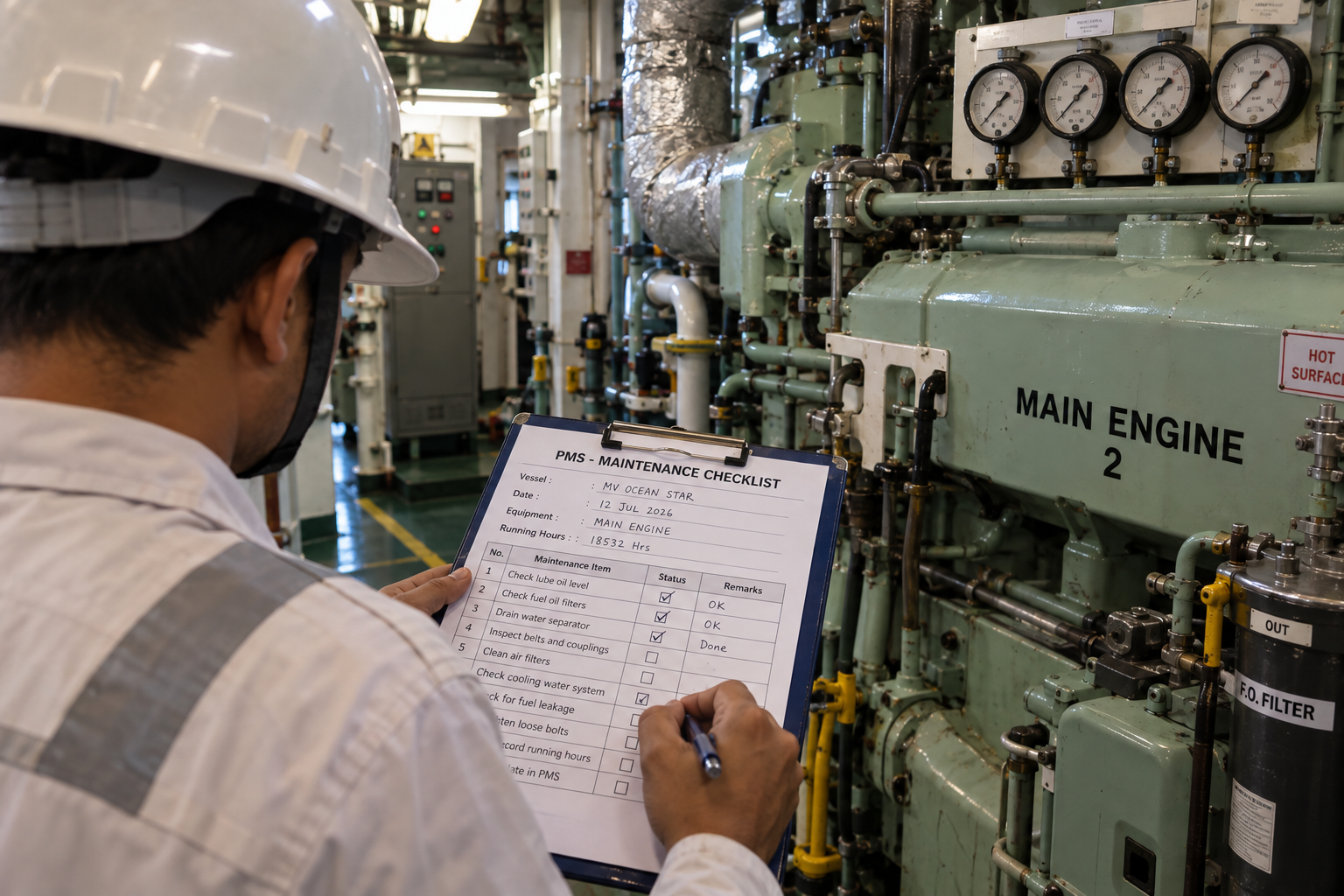
The Five Questions That Actually Matter
Forget the go-live announcement email. These are the questions worth asking three, six, and twelve months after rollout — because the honest answers tell you whether the PMS is delivering real value or quietly turning into expensive shelfware.
Is the system actually being used?
Or are engineers still logging maintenance on paper and someone re-entering it into the platform later, just to keep the dashboard looking current?
Are the processes improving?
A PMS should tighten how maintenance gets planned and closed out — if workflows look exactly like they did pre-rollout, adoption hasn't actually happened yet.
Is the data reliable?
Equipment hours, service history, and spare-parts records are only useful if shore teams trust them enough to make decisions without double-checking by phone.
Are users confident?
Confidence — not just competence — is what keeps engineers using the system under pressure, instead of reverting to whatever they trusted before.
Is the business getting measurable value?
Less downtime, fewer emergency repairs, faster audit prep — if none of these have moved, the platform hasn't earned its place yet, regardless of how smooth go-live felt.
These are the questions that determine whether a PMS implementation is truly successful — far more than whether go-live happened on schedule.
Why This Is Harder in Maritime Than Almost Anywhere Else
A land-based maintenance team can be walked through a new system in a single afternoon, in one room. A fleet can't. Your engineers rotate on and off vessels, work across time zones, and sometimes have only intermittent connectivity to sync anything at all. A Planned Maintenance System built without accounting for that reality looks fine in a demo and quietly fails at sea.
That's why training can't be a single session squeezed in the week before go-live. Engineers need to understand why the new process exists — not just which buttons to press — and that understanding has to travel with every rotation, not just the crew who happened to be onboard during the original rollout.
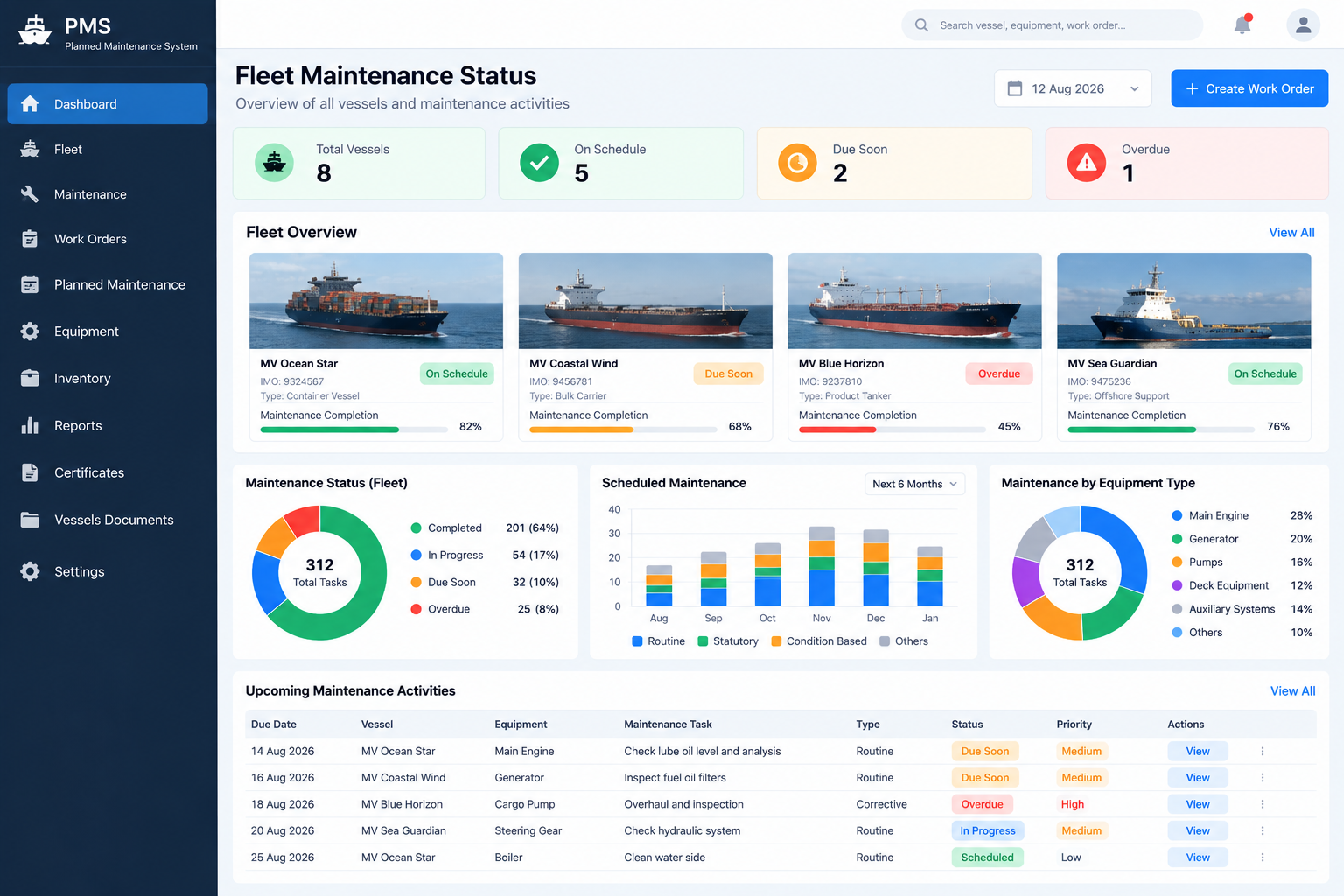
What Good PMS Adoption Actually Looks Like
- Equipment and maintenance data is clean before go-live — not migrated as-is and fixed later.
- Engineers are involved while schedules are still being designed, not handed a finished system to "get used to."
- UAT tests full maintenance cycles — registration through work order through sign-off — not just whether individual screens load.
- Training repeats with every rotation, so new crew never inherit a system nobody explained to them.
- Someone owns adoption after go-live — reviewing usage, fixing data gaps, and following up on the five questions above, deliberately and on a schedule.
Not sure where your fleet's PMS adoption actually stands?
We'll walk through your current maintenance workflows and tell you honestly whether the gap is the software, the rollout, or the process around it.
The Takeaway
A Planned Maintenance System earns its value long after the go-live party ends. The fleets that get the most out of theirs aren't the ones with the slickest dashboard on launch day — they're the ones that keep asking the five questions above, quarter after quarter, and act on the honest answers.
Ready to Build a PMS Your Fleet Will Actually Use?
Our Planned Maintenance System is built around the five stages that matter most: clean data, real training, genuine UAT, and structured support that doesn't stop at go-live.
Explore Our Planned Maintenance System